Water-free quarantine and fire-suppression container for electric vehicles
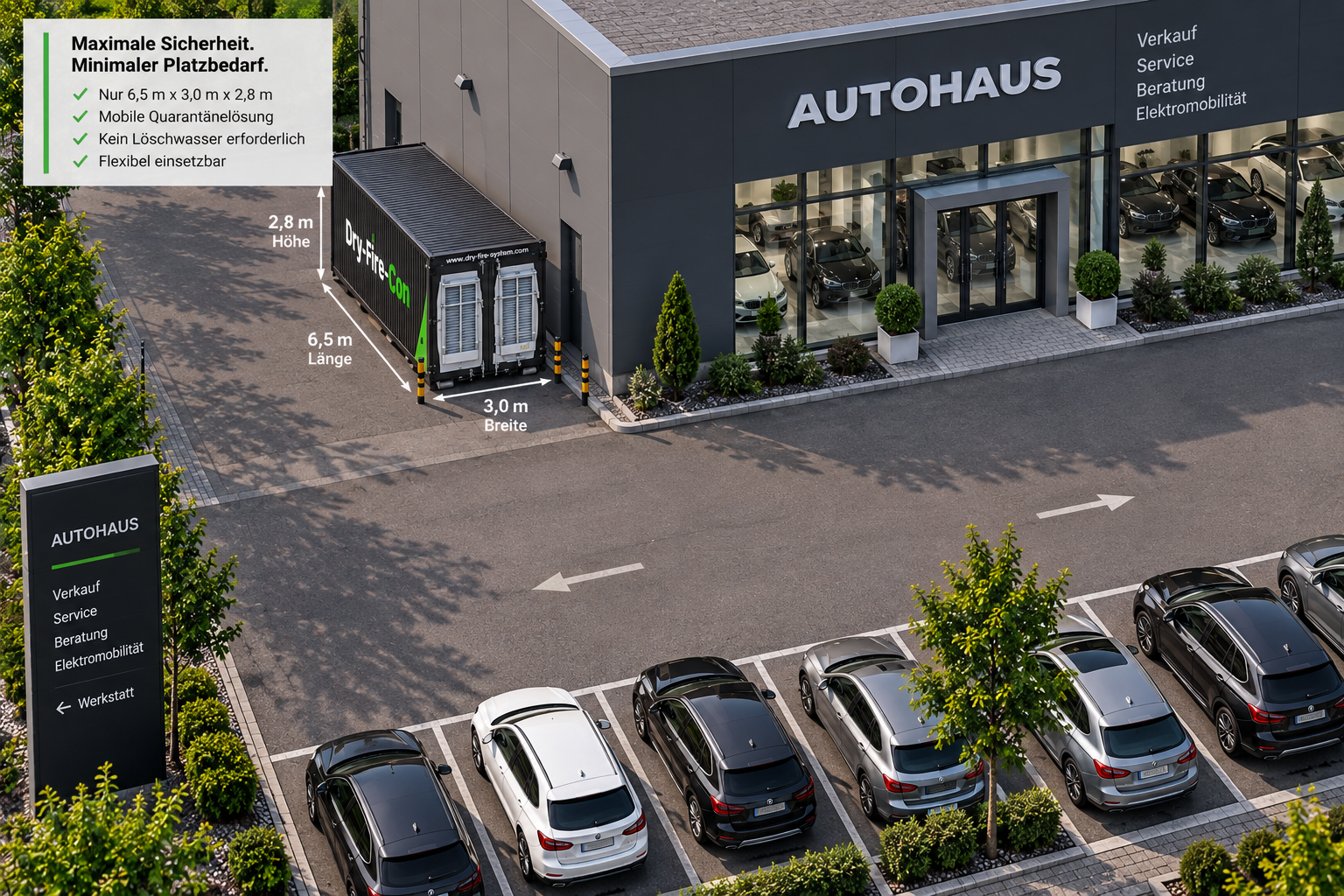
No water, no power supply, no foundation. Available for purchase, rental and leasing.
Or call us directly: +49 171 755 68 21
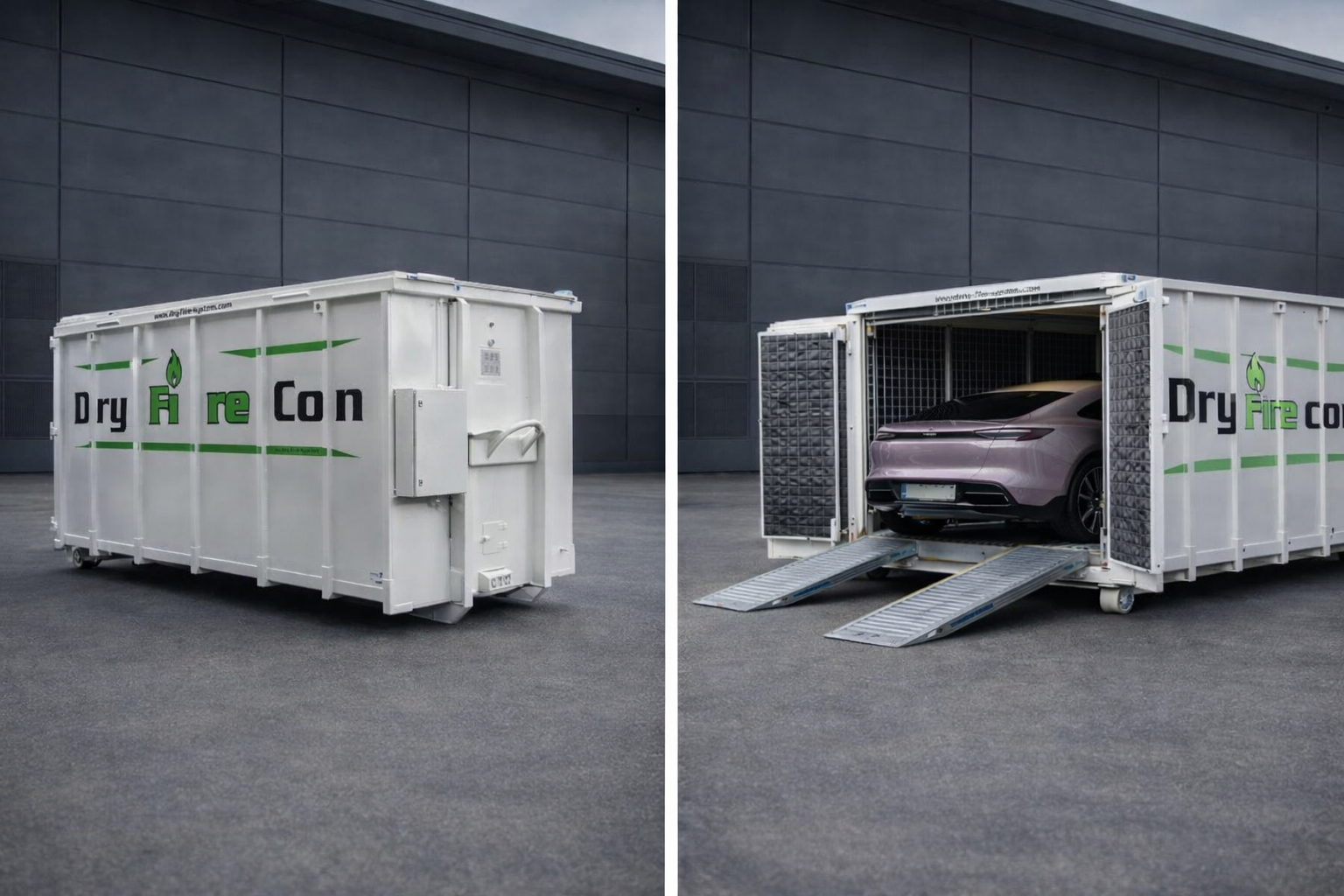
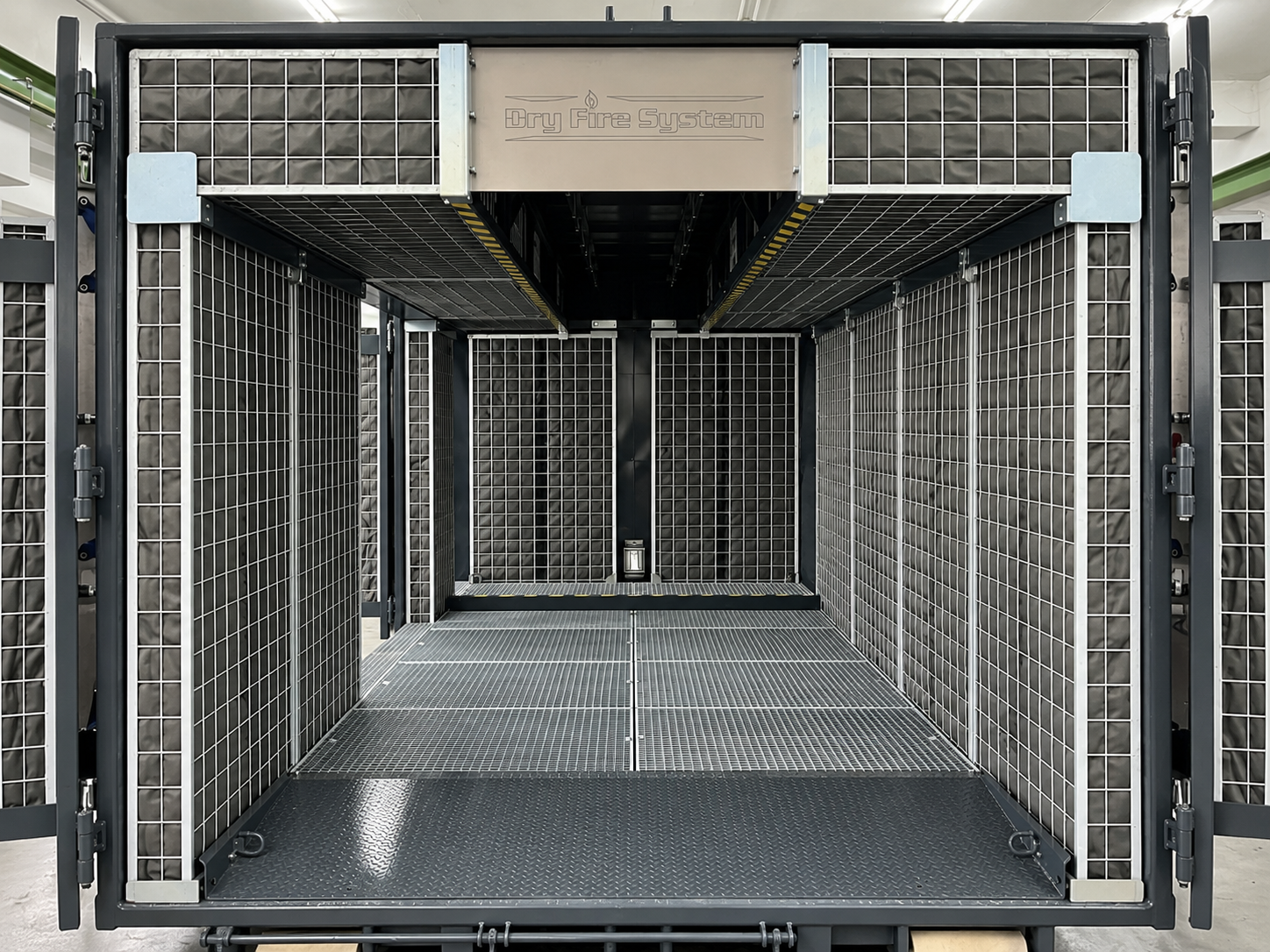
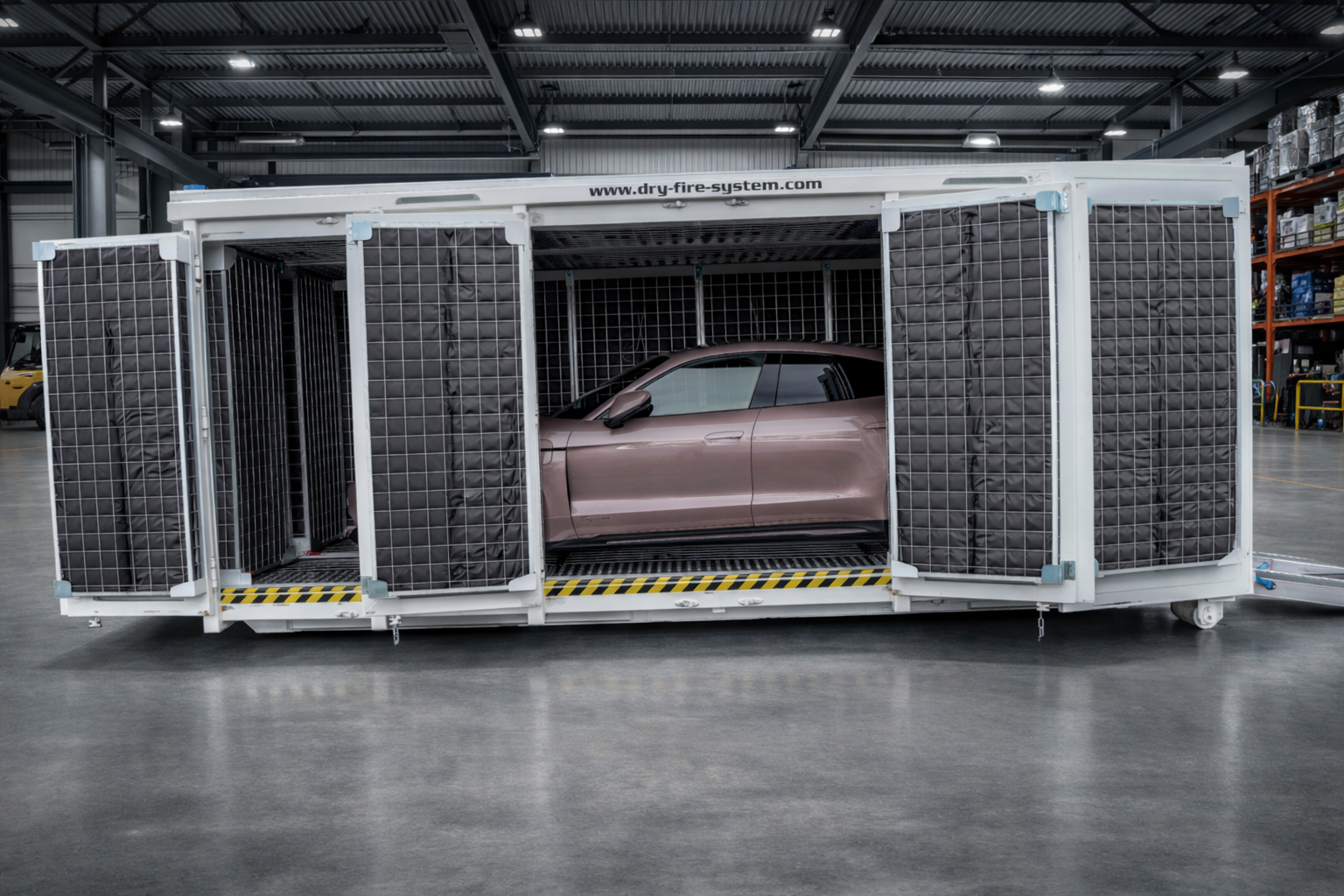
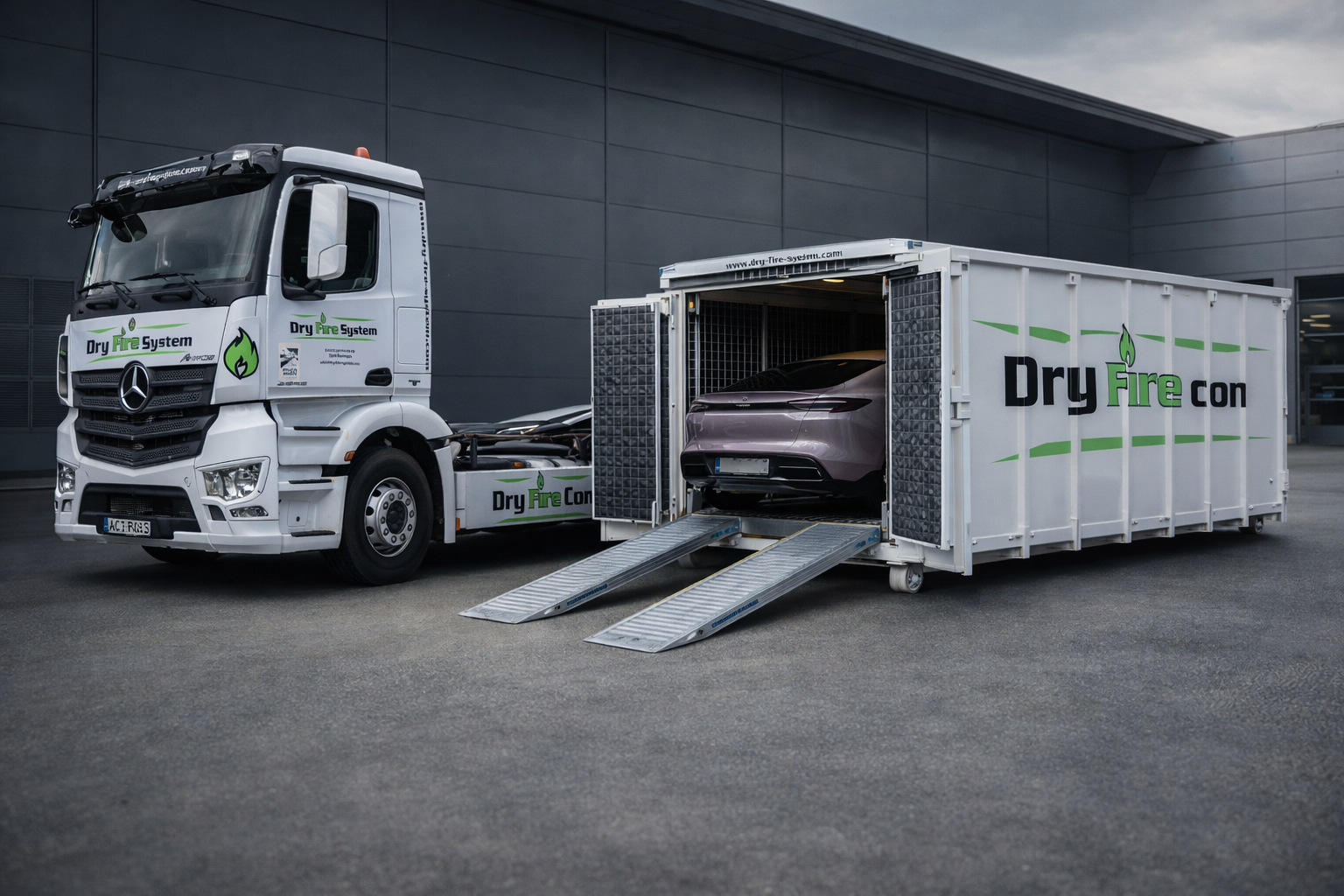
The Dry Fire Con is a water-free quarantine and fire-suppression container for damaged electric vehicles and lithium-ion batteries. The patented AkkuGrain granulate secures a thermal runaway without water, electricity or any further infrastructure, and the container is ready for use on any paved, level surface. It is certified by TÜV SÜD for load securing to VDI 2700 Part 8, which means a vehicle can be stored and transported in the same container.
The cost, space and liability problem
Anyone who takes in a damaged electric vehicle needs a parking space with clearance, observation over several days and an answer for the insurer. Water-based quarantine methods produce contaminated fire water that has to be disposed of as hazardous waste. A dry system does not create that aftermath.
Quarantine area for electric vehicles: duration, cost and requirementsHow the Dry Fire Con secures a thermal runaway
The process works without water, electricity and additional vehicles. The granulate is already inside the container.
Load the vehicle
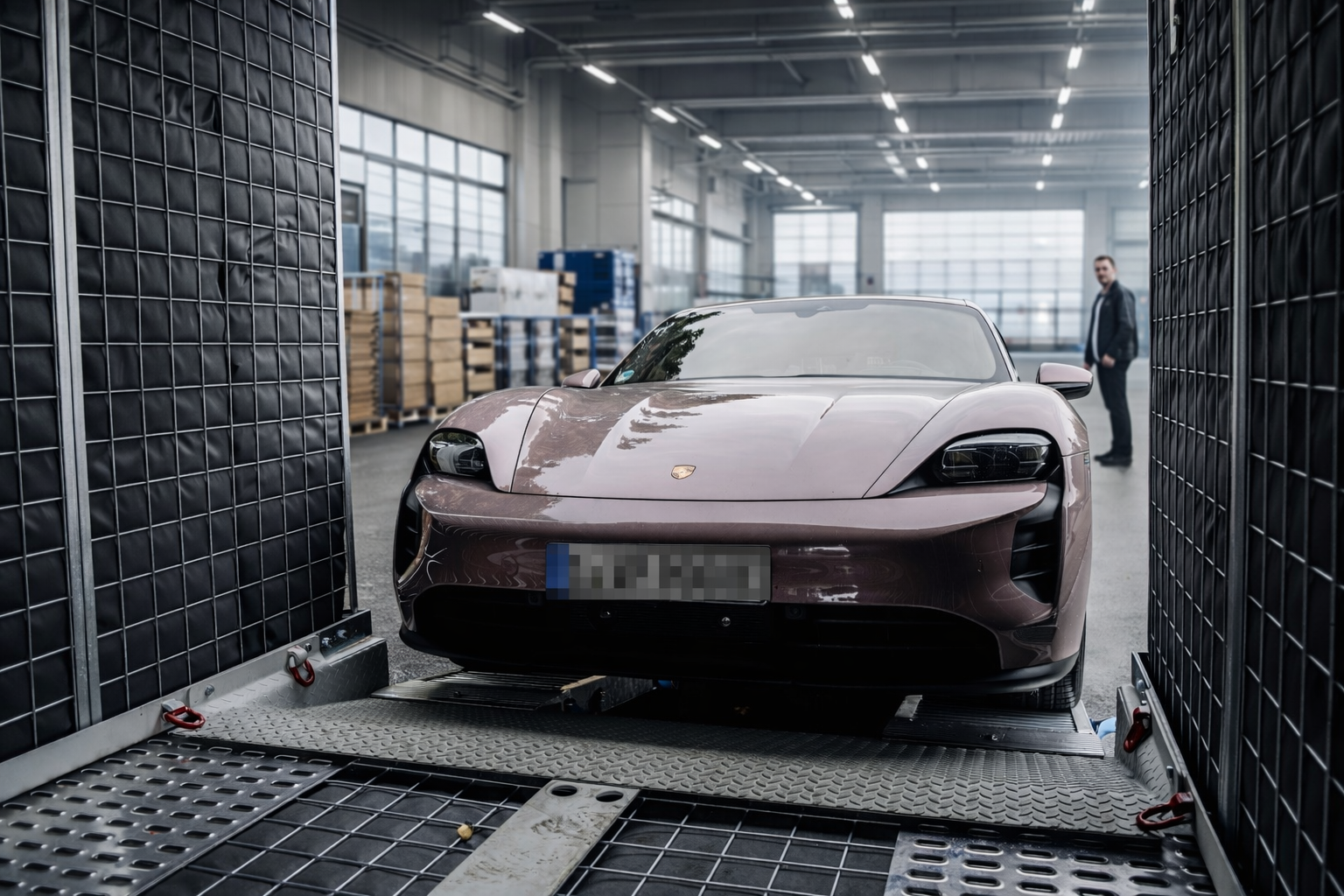
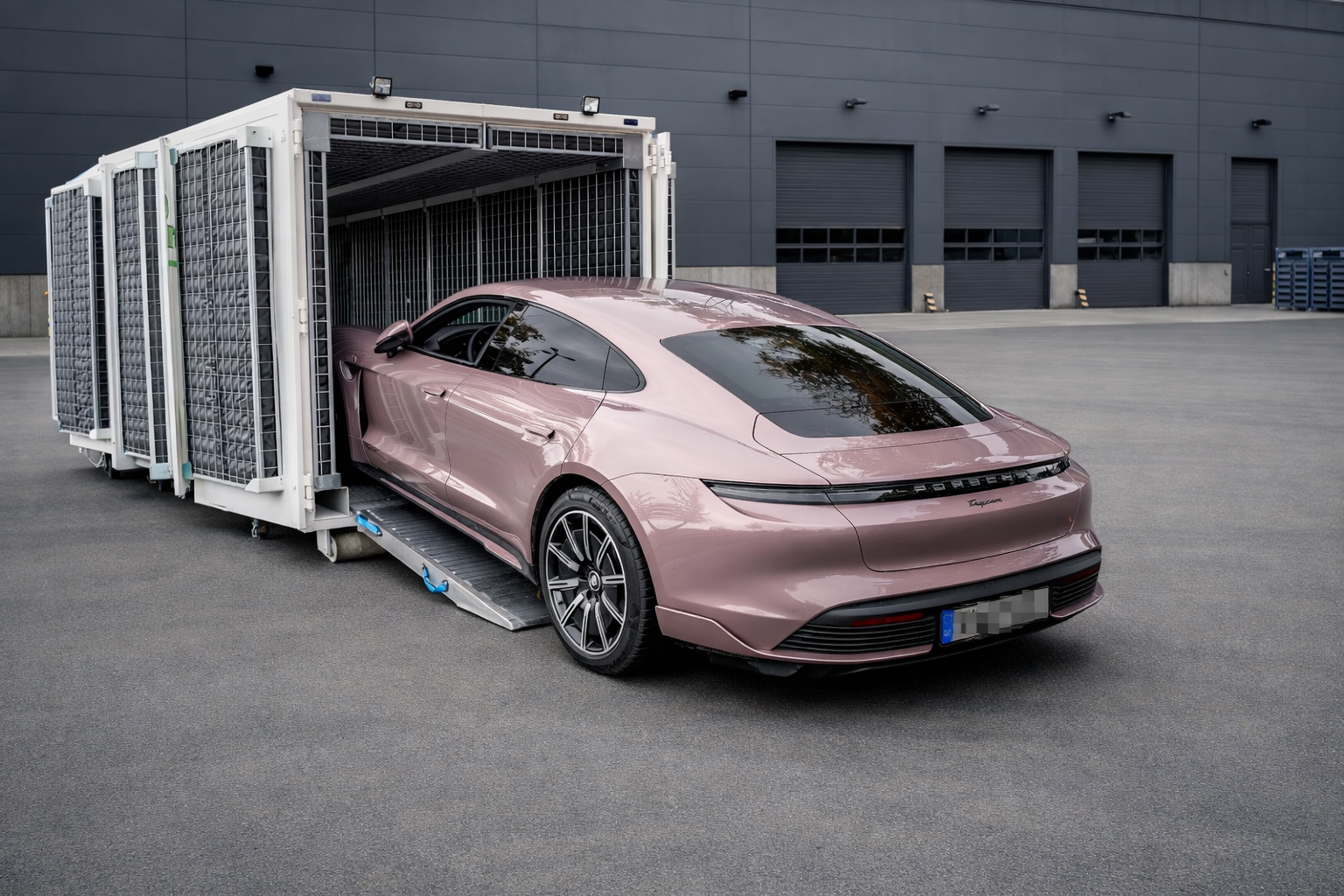
The damaged vehicle is driven into the container over the loading ramps. Ready for use on any paved, level surface, without connections and without preparing the parking area.
AkkuGrain is released
If the battery starts to burn, the ceiling lining releases the granulate. It falls over the vehicle and encloses it, without anyone having to intervene or trigger it.
Bind gases, cool the object
The granulate withdraws heat from the fire and binds the decomposition products of the conducting salt LiPF6, including hydrogen fluoride. In the fire test, HF was not measurable outside the container at any time.
Release pressure in a controlled way
A thermal runaway produces large volumes of gas within a short time. The pressure relief element discharges the overpressure to the outside in a defined way instead of letting it build up inside the closed container. The container stays closed and lockable.
Which application are our systems suited to?
The requirement differs depending on who takes in the vehicle. These pages describe the situation in each sector.
Purchase, rental or leasing
The price depends on the version, the vehicle class, the volume of granulate, the procurement model and the delivery time. In every case the container needs no foundation, no fire water system and no fire alarm system.
Purchase
A permanent quarantine place at your own site. Sensible if damaged vehicles are received regularly or if a requirement applies permanently.
Rental
For an acute single case or a limited period. The container is delivered to your site and returned once the case is closed.
Leasing
A predictable monthly rate instead of a one-off investment. The container is permanently available without tying up capital.
We state the price for your version and your application in the quotation.
Technical data and test basis
The following data applies to all versions of the Dry Fire Con. Dimensions, weights, AkkuGrain filling volume and delivery time depend on the version and the vehicle class and are stated in the quotation.
- Permissible vehicle mass
- 0 to 4,500 kg, passenger cars and light commercial vehicles
- Load securing
- TÜV SÜD, certificate Z26032301-1 to VDI 2700 Part 8:2024-09
- Driving test
- DIN EN 12642 Code XL Annex B, passed on 1 April 2026
- Sliding friction coefficient
- 0.42 in the least favourable case, minimum required 0.4
- Lashing points
- 700 daN at 0 and 45 degrees, 600 daN at 90 degrees
- Manufactured to
- DIN 14505 and DIN 30722-1
- Dangerous goods assessment
- Expert opinion no. 2026-003 of 24 May 2026, ADR 2025
- Installation
- paved, level surface, no foundation
- Connections required
- none, neither power nor fire water
- Water protection
- integrated collection trays, designed to AwSV
- Recurring inspection
- annual re-assessment of the certification
- Versions
- Standard, XL and XXL; dimensions and weights on request
- Industry recommendation
- Container named as an alternative operating concept in VDA/VDIK, Technical Quarantine Areas, August 2022
Facts and figures
The container vehicle transporter of type Peter-Bartau SO was tested by TÜV SÜD, Institute for Load Securing in Metelen, to VDI 2700 Part 8:2024-09 and certified on 22 April 2026 under certificate number Z26032301-1. A dangerous goods expert opinion (no. 2026-003 of 24 May 2026, Gefahrgut-Consulting Franz, Koblenz) assesses the container under ADR 2025: intact vehicles are exempted as cargo under special provision 666, and damaged vehicles whose battery cannot be safely removed may be carried under special provision 667 b) (ii). The ADR amendments adopted for 2027 do not affect this use. In the joint recommendation on Technical Quarantine Areas issued by VDA and VDIK (August 2022), a suitable container with sufficient ventilation and pressure relief is explicitly named as an alternative operating concept; with such concepts the clearance distance may be adjusted while maintaining fire protection requirements. The manufacturer is Dry Fire System GmbH, Leonberger Straße 22, 71272 Renningen, Germany.
The Dry Fire Con in use
Frequently asked questions
No. The Dry Fire Con works without fire water and without electricity and is placed on a paved, level surface without a foundation. No fire water system, fire alarm system or further infrastructure is required. Whether a building permit or coordination with the authorities is needed in an individual case depends on state building law, the location and the use, and should be clarified case by case. A structural installation with a foundation and retention, by contrast, regularly requires a permit procedure.
Dangerous goods expert opinion no. 2026-003 of 24 May 2026 concludes that the containers are suitable as quarantine places at car dealerships and vehicle manufacturers without large clearance areas having to be defined. The reason is the integrated collection trays, which prevent water-polluting substances from escaping. Requirements imposed by authorities in individual cases remain unaffected.
Yes. Under ADR 2025 intact vehicles are exempted as cargo under special provision 666. For damaged vehicles whose battery cannot be safely removed, carriage is permitted under special provision 667 b) (ii). This is assessed in expert opinion no. 2026-003 of 24 May 2026. The container is additionally certified by TÜV SÜD for load securing to VDI 2700 Part 8.
No, and that is not possible: under ADR a container is not a packaging, so packing instructions P911 and LP906 do not apply to it. The container was nevertheless tested against exactly these criteria. The Fraunhofer HHI test report documents that the required criteria were met and in part exceeded.
VdS 3103 is a guideline issued by the German insurance industry and was written for intact, new lithium batteries; it applies only to a limited extent to damaged and defective batteries. The Dry Fire Con is designed in line with VdS 3103 and with the guidance of the German Federal and State Working Group on handling lithium-ion batteries under AwSV. We compile the test documents for discussions with your property insurer.
Yes. The container works without fire water, and the integrated collection trays ensure that no water-polluting substances escape. The design follows the German AwSV and the associated guidance of the Federal and State Working Group.
Yes. Purchase, rental and leasing are available. Which model makes sense depends on whether damaged vehicles are received regularly or a single case has to be covered.
Request a quote for your site
Tell us how many damaged vehicles you receive per year and how much space is available. We usually reply the same working day. In an acute case, please call instead.